

 Icon Process
$499.65
 GA - FL

Product details
Headline
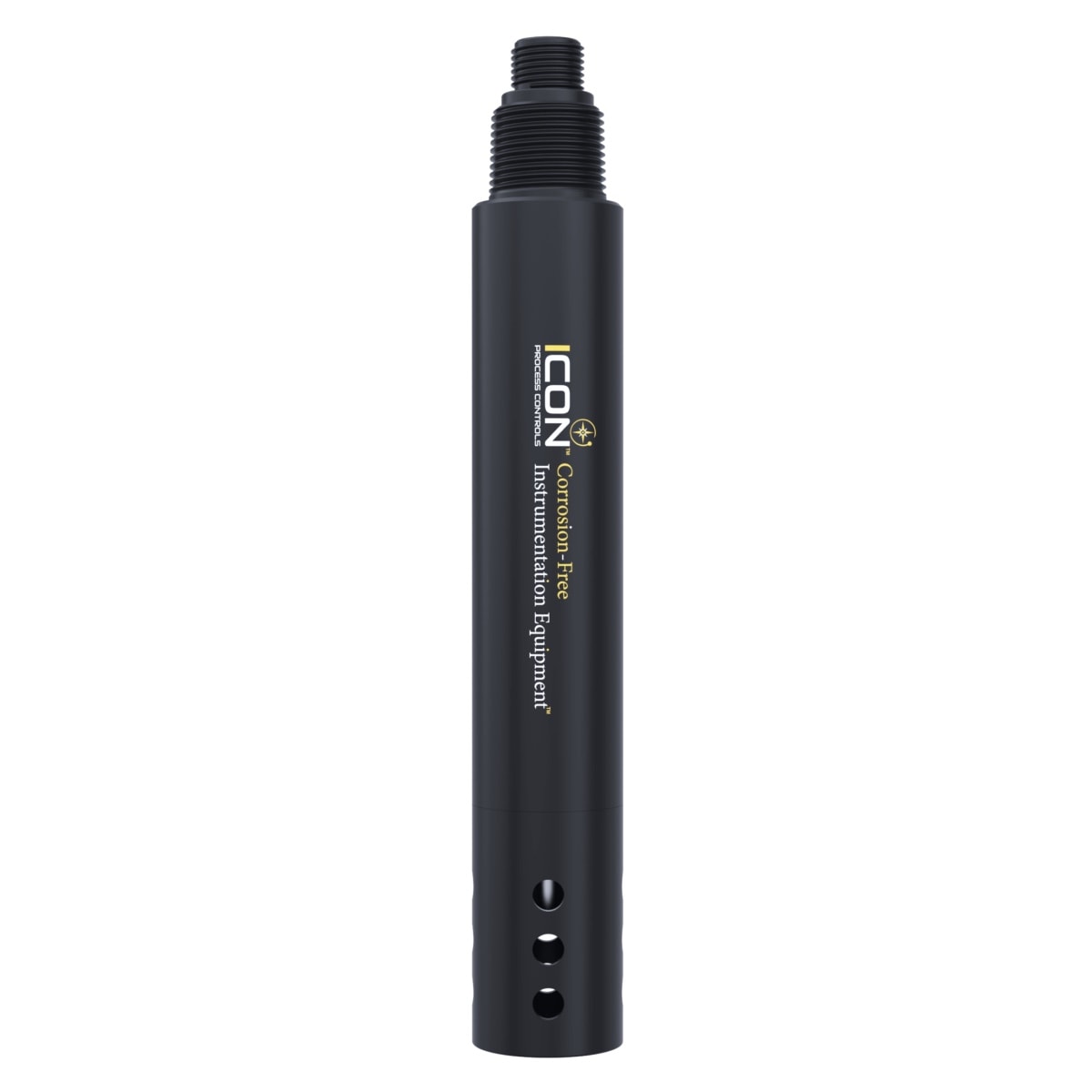
DO3000 Series Dissolved Oxygen Sensor
The DO3000 Dissolved Oxygen sensor uses a fluorescence-based method to measure oxygen levels in water. Blue light emitted from the sensor excites the fluorescent layer, causing it to release red light. Since this technique does not consume oxygen, it provides stable data, reliable performance, and strong resistance to interference, while keeping installation and calibration straightforward.
The DO3000 measures 0–20 mg/L (0–200% saturation) with ±1% F.S. accuracy and communicates directly over RS485 Modbus RTU. A POM body with stainless-steel sensing membrane, G¾" threaded connection and IP68 / NEMA 6P rating suit continuous submerged service — pair it with the optional DO3500 Dissolved Oxygen Controller for display, 4-20mA outputs and relay control.
Features & benefits
Key Features
- Fluorescence Quenching Technology — optical measurement that does not consume oxygen
- No Chemical Reagents Required
- Easy Installation — G¾" threaded connection
- RS485 Modbus RTU — direct-to-controller connectivity
- High reliability and interference resistance
- IP68 | NEMA 6P protection
- Simple calibration — anaerobic (zero-oxygen) water | air calibration
- RoHS compliant
Construction
- POM body
- SS304 stainless-steel sensing membrane
- Ø35 mm × 190 mm
DO3500 Dissolved Oxygen Controller (optional, DO3000-C)
- 0.005–20.00 mg/L display, 0.001 mg/L resolution
- 2 × 4-20mA outputs + RS485 Modbus RTU
- Three relay control contacts (5A 250VAC / 5A 30VDC)
- Data record & curve display; panel, wall or pipeline mount; IP65
Applications
- Drinking water treatment plants & distribution networks
- Swimming pools
- Water treatment
- Wastewater & aeration monitoring
- Aquaculture